Do you really answer the storm line 24/7?
Yes. A real person - not a recording, not a call center. If you call our number after hours, the line rolls to the on-call estimator who triages emergency calls.
 Roof Replacement
Insurance
Claim Help
Inspect & Plan
Inspection
Commercial
Commercial
Gutters & Extras
Add-ons
Yes. A real person - not a recording, not a call center. If you call our number after hours, the line rolls to the on-call estimator who triages emergency calls.
When crews are available, we tarp the same day across the Huntsville metro and 40-mile radius. During a major weather event, we triage by severity: active leaks first.
Tarp cost depends on the size of the affected area and the roof pitch. A typical residential tarp runs $300 to $900. We will give you a number on the phone before dispatch.
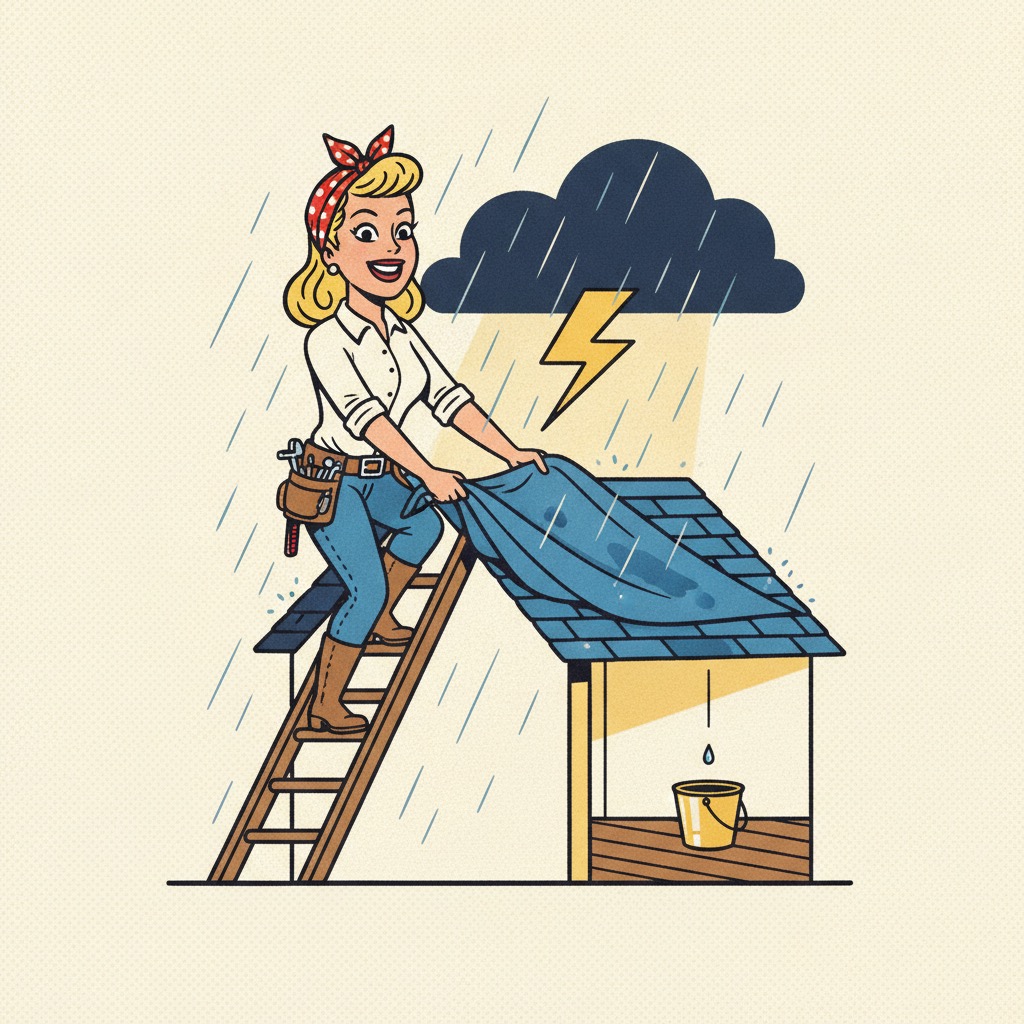
A tree just fell on your house. A storm ripped shingles off the back slope and water is dripping into the living room. A pipe boot failed and the ceiling is bulging. These are emergencies, and they happen at 2 a.m. as often as 2 p.m. Our storm line is staffed 24/7. We answer. We dispatch. We stop the water before the drywall, the insulation, and the framing are ruined.
Schedule Free InspectionActive water intrusion is the #1 emergency - water is actively entering the home. A visible tree or large debris on the roof is the #2. A missing patch of shingles over living space with rain on the way is the #3. Anything that is going to be a problem in the next 24 hours if nothing is done qualifies. Cosmetic issues - a missing tab on a slope that does not get rain for a week - can wait for a normal inspection. A bulging ceiling, a steady drip, water staining that is fresh and growing - those are emergencies. We will help you triage on the phone.
Move people and valuables out of the affected area. Place a bucket or trash can under the drip. If a ceiling is bulging, poke a small hole with a screwdriver to release pooled water safely into the bucket - this prevents a larger ceiling collapse. Do NOT climb the roof. Wet shingles + height + adrenaline is the leading cause of storm-related injuries. Call our storm line. We will walk you through the next steps and dispatch a crew.
Crew arrives, walks the affected area with you, identifies the source of the leak, and tarps or seals it on the spot. Tarp installation uses a proper anchor pattern (not drywall screws and plastic) so the tarp survives the next round of weather. We then document the damage with photos - both for your records and for your insurance carrier - and write a written scope of the permanent repair. Most emergency calls are wrapped in 1 to 3 hours. Permanent repair is scheduled for the next clear-weather window.
A tarp is a stopgap, not a fix. Tarp paper is rated for 30 to 90 days of UV exposure; on a Huntsville summer roof, you have 2 to 4 weeks before the tarp itself starts to fail. The right plan after a tarp is: photo-documented inspection report, line-item repair estimate, and a scheduled permanent repair - usually within 2 to 4 weeks of the storm. If insurance is involved, we hand you the documentation and your carrier approves the permanent scope.
Sometimes the emergency repair is the second-to-last step in a longer story. If the roof is past mid-life, has been repaired multiple times, or the storm damage is broad, the right long-term answer is replacement, not another patch. We will tell you honestly: this roof has 2 to 3 years left, or this roof has 10 years left. If replacement is the right call, we explain why with photos. You decide the scope, we execute it.
Emergency tarping is a small, fixed cost - far less than the water damage it prevents. Permanent repair is line-itemed the same way any of our work is. If the emergency is storm-related, the cost is usually covered under your policy dwelling coverage, less your deductible. We document everything. We do not negotiate with your carrier, but we give you the file you need to file the claim cleanly.
Use this in the first hour after a storm. If you are mid-storm or actively leaking, jump to step 4 and call our 24/7 line.
Still have a question? Schedule a free roof inspection and we'll answer it on-site with photos.
Book Free InspectionYes. A real person - not a recording, not a call center. If you call our number after hours, the line rolls to the on-call estimator who triages emergency calls.
When crews are available, we tarp the same day across the Huntsville metro and 40-mile radius. During a major weather event, we triage by severity: active leaks first.
Tarp cost depends on the size of the affected area and the roof pitch. A typical residential tarp runs $300 to $900. We will give you a number on the phone before dispatch.
Usually yes, as part of the larger storm claim. We give you a receipt and the documentation your carrier needs.
It will start again with the next rain. A tarp is a few hundred dollars. Water damage repair (drywall, insulation, framing, mold) is thousands. Tarp now.
Yes, within reason. Light to moderate rain is fine. Severe thunderstorms with lightning are not - we do not put a crew on a wet metal roof in an active lightning event. We schedule the tarp for the next safe window.
We coordinate. If the tree is small and the structural damage is limited, we can tarp the same day. If the tree is large or there is structural damage, we coordinate with a licensed tree service first and your insurance carrier.
Huntsville and a 40-mile radius: Madison, Athens, Decatur, Hartselle, Priceville, Meridianville, Hazel Green, New Market, Owens Cross Roads, Hampton Cove, Gurley, New Hope, Tanner, Elkmont, Ardmore (AL and TN), Fayetteville TN, and surrounding communities.
Call (256) 915-2215 - 24/7 storm line. Same-day tarp. Real person, no recording.